IP Metropolitan Area Network: Complete Guide to Urban High-Speed Networking
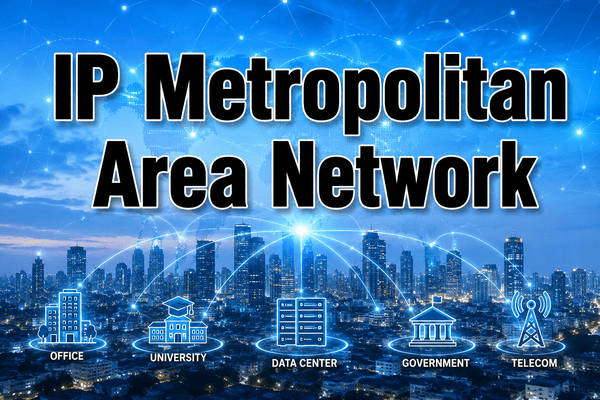
An IP Metropolitan Area Network is a communication network that connects multiple local networks across a city or large urban area using Internet Protocol (IP). It is designed to provide fast, reliable, and scalable connectivity between offices, campuses, government departments, data centers, and service providers within a metropolitan region.
As businesses and cities continue to depend on digital communication, IP Metropolitan Area Networks have become an important part of modern networking infrastructure. These networks support internet services, cloud computing, enterprise communication, and smart city operations by delivering high-speed data transmission over large geographic areas.
This article explains everything about IP Metropolitan Area Networks, including their features, components, working principles, advantages, disadvantages, applications, and future importance.
Table of Contents
ToggleWhat Is an IP Metropolitan Area Network?
An IP Metropolitan Area Network, often called an IP MAN, is a network that covers a larger area than a Local Area Network (LAN) but a smaller area than a Wide Area Network (WAN). It uses Internet Protocol to transfer data between connected locations within a city or metropolitan region.
The primary purpose of an IP MAN is to connect different networks and communication systems into a single high-speed infrastructure. These networks are commonly used by telecom providers, universities, businesses, and government organizations.
For example, a company with multiple offices across a city can use an IP MAN to connect all branches through one secure and efficient network.
How an IP Metropolitan Area Network Works
An IP Metropolitan Area Network works by transmitting data through a high-speed backbone infrastructure, usually built with fiber-optic cables.
Basic Working Process
- A user sends data from a computer or local network.
- The data reaches a router or network switch.
- The router forwards the data through the metropolitan backbone.
- The network determines the best path for data transmission.
- The destination device or network receives the data.
IP routing protocols help manage traffic and ensure efficient communication between different connected locations.
Main Components of an IP Metropolitan Area Network
Routers
Routers are responsible for directing data packets between networks. They play a major role in managing IP traffic across the metropolitan infrastructure.
Fiber-Optic Infrastructure
Fiber-optic cables are widely used in IP MANs because they provide high bandwidth, fast transmission speeds, and low latency.
Network Switches
Switches connect devices within network segments and allow efficient internal communication.
Security Systems
Security tools such as firewalls and intrusion prevention systems help protect the network from unauthorized access and cyber threats.
Data Centers
Many IP MANs are connected to data centers that store applications, cloud services, and organizational data.
Key Features of IP Metropolitan Area Networks
High-Speed Connectivity
IP MANs provide fast communication using advanced fiber-optic networking technology. This supports large amounts of data traffic across urban areas.
Wide Geographic Coverage
These networks can connect multiple locations across a city, including offices, campuses, and service centers.
Scalability
Organizations can expand the network by adding new devices, branches, or communication systems.
Centralized Management
Administrators can monitor traffic, manage performance, and control security from centralized systems.
Reliable Communication
Many metropolitan networks include backup routes and redundant systems to improve network stability.
Types of Technologies Used in IP MAN
Several networking technologies are used to build and operate IP Metropolitan Area Networks.
Ethernet Technology
Ethernet is commonly used for high-speed communication within metropolitan networks because it is cost-effective and efficient.
MPLS
Multiprotocol Label Switching (MPLS) improves traffic management and helps deliver reliable network performance.
IPv4 and IPv6
IP MANs use Internet Protocol versions IPv4 and IPv6 for addressing and routing data packets.
Fiber-Optic Networking
Fiber technology forms the backbone of most modern metropolitan networks because of its high data transmission capacity.
Advantages of IP Metropolitan Area Networks
Fast Data Transfer
IP MANs provide rapid communication between connected locations, making them ideal for businesses and institutions.
Improved Resource Sharing
Organizations can share servers, applications, internet connections, and storage systems across multiple branches.
Better Communication
Employees and departments in different locations can communicate efficiently using a unified network infrastructure.
Scalable Infrastructure
The network can easily grow with the organization’s needs.
Reliable Performance
Modern IP MANs are designed to minimize downtime and maintain stable communication.
Disadvantages of IP Metropolitan Area Networks
High Installation Costs
Building a metropolitan network infrastructure requires significant investment in fiber cables and networking equipment.
Complex Maintenance
Large-scale networks require experienced professionals for management and troubleshooting.
Security Risks
Because these networks connect multiple locations, they can become targets for cyberattacks if security measures are weak.
Infrastructure Dependence
Physical damage to cables or equipment may disrupt communication services.
Applications of IP Metropolitan Area Networks
Business Connectivity
Companies use IP MANs to connect offices and branch locations across cities.
University Networks
Universities connect campuses, libraries, and research centers using metropolitan networks.Government Communication Systems
Government departments share information and services through secure metropolitan infrastructure.
Telecom Services
Internet service providers and telecom companies use IP MANs for broadband and communication services.
Smart City Operations
Metropolitan networks support traffic systems, surveillance networks, and public communication services.
Difference Between LAN, MAN, and WAN
| Network Type | Coverage Area | Common Example |
|---|---|---|
| AND | Single building or office | Home or office network |
| MAN | City or metropolitan region | City-wide enterprise network |
| VAN | Country or global area | Internet |
Future of IP Metropolitan Area Networks
The future of IP Metropolitan Area Networks is closely connected with digital transformation and smart infrastructure development.
Growing technologies such as cloud computing, 5G communication, and Internet of Things (IoT) devices require reliable high-speed networking systems. IP MANs are expected to become more important as cities and businesses continue expanding their digital operations.
Modern metropolitan networks are also focusing on better cybersecurity, higher bandwidth capacity, and improved automation for network management.
Quick Info About IP Metropolitan Area Network
| Topic | Information |
|---|---|
| Full Form | IP Metropolitan Area Network |
| Main Purpose | City-wide network connectivity |
| Coverage Area | Metropolitan or urban region |
| Common Medium | Fiber-optic cables |
| Main Users | Businesses, universities, telecom providers |
| Protocol Used | Internet Protocol (IP) |
| Main Benefit | High-speed communication |
FAQs About IP Metropolitan Area Network
What is an IP Metropolitan Area Network?
An IP Metropolitan Area Network is a city-wide communication network that uses Internet Protocol to connect multiple local networks.
What is the main purpose of an IP MAN?
The main purpose is to provide high-speed and reliable connectivity across different locations within a metropolitan area.
Which technology is commonly used in IP MANs?
Fiber-optic networking is commonly used because it supports high-speed data transmission.
What is the difference between MAN and WAN?
A MAN covers a city or metropolitan region, while a WAN covers much larger geographic areas such as countries or continents.
Who uses IP Metropolitan Area Networks?
Businesses, telecom providers, universities, and government organizations commonly use these networks.
Conclusion
An IP Metropolitan Area Network is an essential networking solution for modern urban communication. It connects multiple locations through high-speed IP-based infrastructure and supports efficient data sharing, business operations, telecom services, and institutional communication.
With increasing demand for fast and reliable digital connectivity, IP Metropolitan Area Networks continue to play an important role in supporting communication systems across metropolitan regions.